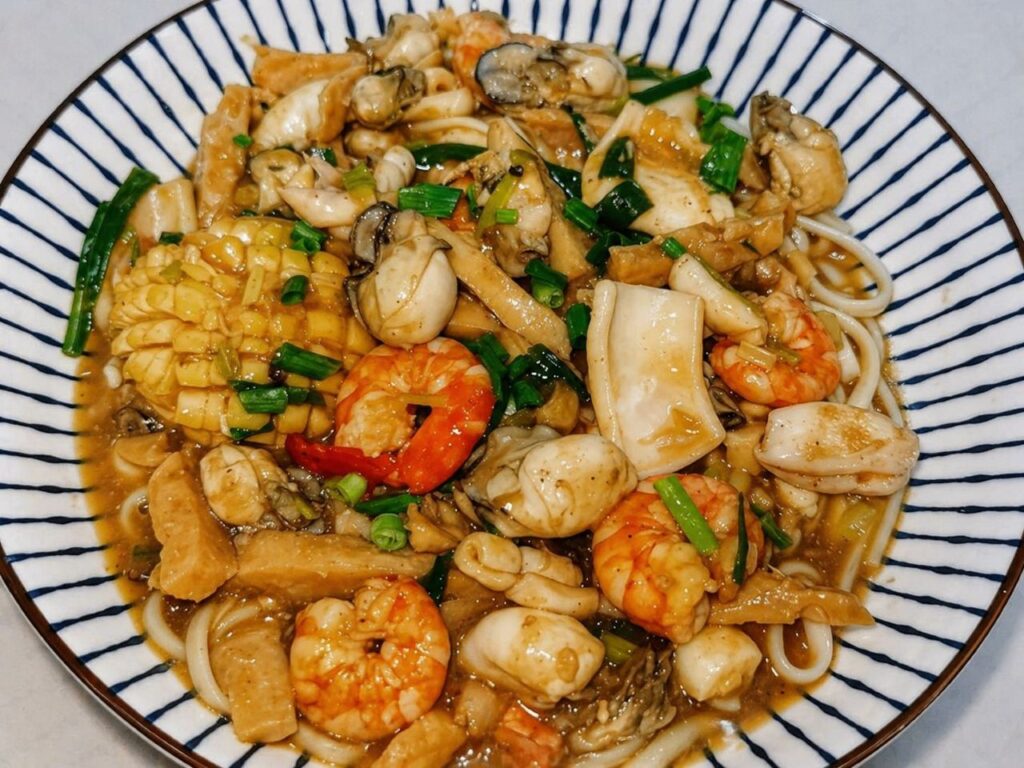
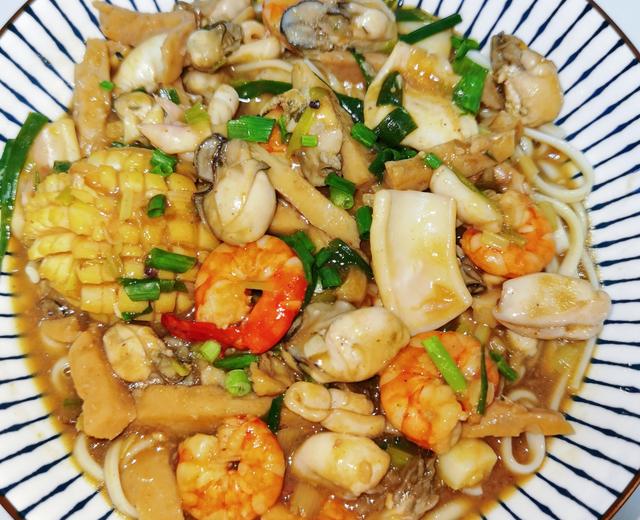
Seafood Lo Mein from Guangdong’s Chaoshan region is a very authentic and popular home-style dish in southern China. What stands out the most when you eat it are two key characteristics: “fresh” and “rich.” Fresh seafood is paired with a thick, flavorful sauce, so every strand of noodles is fully coated. The portion is generous, and the texture is incredibly satisfying.
You get the natural sweetness of the seafood along with the deep, savory flavor of the sauce. The method is not complicated, and it’s very adaptable. This recipe is specifically designed for beginners cooking at home. Every step is broken down in detail, including exact actions, so it’s easy to follow. All the ingredients can be found in a regular supermarket, and common substitutions are clearly listed. You don’t need any special equipment—just a simple setup at home is enough to make a big, hearty bowl packed with ingredients, where every bite delivers the unique flavor of Seafood Lo Mein.
What Is Seafood Lo Mein?
Seafood Lo Mein is like a reflection of the food culture in the Chaoshan region of Guangdong. Thanks to the rich coastal seafood resources, the dish focuses on a flavor profile that is “fresh without being fishy, and rich without being heavy.”
Unlike typical mixed noodles, the soul of this dish lies in “making a seafood broth first, then thickening it into a sauce.” Fresh seafood is used to create a natural, flavorful broth, which is then combined with seasonings like satay sauce and soy sauce. A light thickening step creates a rich sauce that clings to the noodles.
Once poured over cooked noodles, the sweetness of the seafood blends with the savory depth of the sauce. Every strand of noodles is coated, and each bite delivers both the bouncy texture of seafood and the soft, chewy texture of the noodles. The cooking method is simple, but the flavor has great depth.
One of the best things about this dish is how flexible it is. You can easily substitute different types of seafood based on what’s available at your local store—you don’t need to use ingredients specific to the Chaoshan region. The thickness of the sauce can also be adjusted to your taste: use less starch for a lighter texture or more for a richer, thicker sauce. You don’t need complicated Chinese seasonings, and even beginners can learn it easily. It’s a great way to explore Chinese seafood flavors at home with Seafood Lo Mein.
🍲 About This Recipe
This home-style version of Seafood Lo Mein is especially suitable for making at home because it keeps the authentic Chinese flavor while offering practical advantages.
Compared to traditional mixed noodles that are either too light or overly heavy in sauce, this dish always centers around freshness. It doesn’t rely on complicated spices or professional equipment. With simple, everyday ingredients, you can create a rich and satisfying flavor that showcases the unique appeal of Chinese seafood without being overwhelming.
Another highlight is its flexibility. The seafood can be freely adjusted depending on what you can find at your local supermarket—you don’t have to stick to traditional ingredients from the Chaoshan region. The sauce thickness can also be customized: reduce the starch if you prefer something lighter, or add more if you like a richer texture. The noodles can be whatever you usually eat at home—there’s no need to specifically buy Chinese noodles, which makes the recipe even easier to follow.
What makes this dish even better is that it’s both delicious and convenient. From start to finish, it takes about 30 minutes (not including prep time), making it perfect for busy home cooking. It works well as a main meal or even a quick extra dish. The combination of fresh seafood and rich sauce satisfies both taste and nutrition, providing high-quality protein and making Seafood Lo Mein a practical, versatile, and cost-effective homemade meal.
Easy Seafood Lo Mein Recipe (捞面)
Course: REGION2
servings15
minutes15
minutes480
kcalIngredients
Shrimp: 10 pieces (about 150g), use fresh shrimp, peeled and deveined, heads kept on for extra flavor(Frozen shrimp works too—thaw and drain well before cooking)
Squid: 200g (Use calamari or squid rings, cut into strips—avoid slicing too thin to prevent overcooking)
Abalone: 2 pieces (Substitute with scallops or mussels (~100g) for similar texture and easier availability)
Oysters: 200g (Use fresh or frozen oyster meat, drain well after thawing)
Ground meat: 100g (Use ground pork or beef, form into small patties or cook loose for added texture)
Green onions: 3 stalks (Substitute with scallions or celery; use white parts for sautéing, green parts for finishing)
Garlic: 5 cloves, minced (Essential for flavor—can substitute with 1 tsp garlic powder if needed)
Noodles: about 150g (Use spaghetti, linguine, or dried noodles—choose based on preference)
Satay sauce: 1 tbsp (about 15 ml) (If unavailable, mix peanut butter + a little soy sauce + a pinch of chili powder as a substitute)
Light soy sauce: 1 tbsp (about 15 ml) (Or low-sodium soy sauce / Japanese soy sauce)
Oyster sauce: 1 tbsp (about 15 ml)(Or mushroom sauce / seafood sauce for umami depth)
Dark soy sauce: ½ tbsp (about 7.5 ml) (For color only—optional, avoid using too much)
White pepper: ½ tsp (about 2 g) (Adds aroma and helps reduce seafood odor)
Starch: about 20 g (Use cornstarch or potato starch for thickening)
Water: about 120 ml (For making shrimp broth and slurry)
Cooking oil: 1 tbsp (about 15 ml) (Use olive oil, sunflower oil, or any neutral oil)
Salt: to taste (about 2–3 g, adjust as needed)
Directions
- Prepare the seafood: peel and devein the shrimp, keeping the heads for stock; clean the squid and cut into about 1 cm strips (thaw frozen squid first and pat dry); clean the abalone and score lightly in a cross pattern (or simply rinse scallops/mussels); pat oysters dry to prevent excess water from diluting the sauce.
Prepare the rest: cut the meat into small pieces (or keep ground meat ready); cut green onions into 3 cm sections and separate the white parts; mince the garlic finely; mix starch with about 2 tablespoons of water (30 ml) to make a smooth slurry.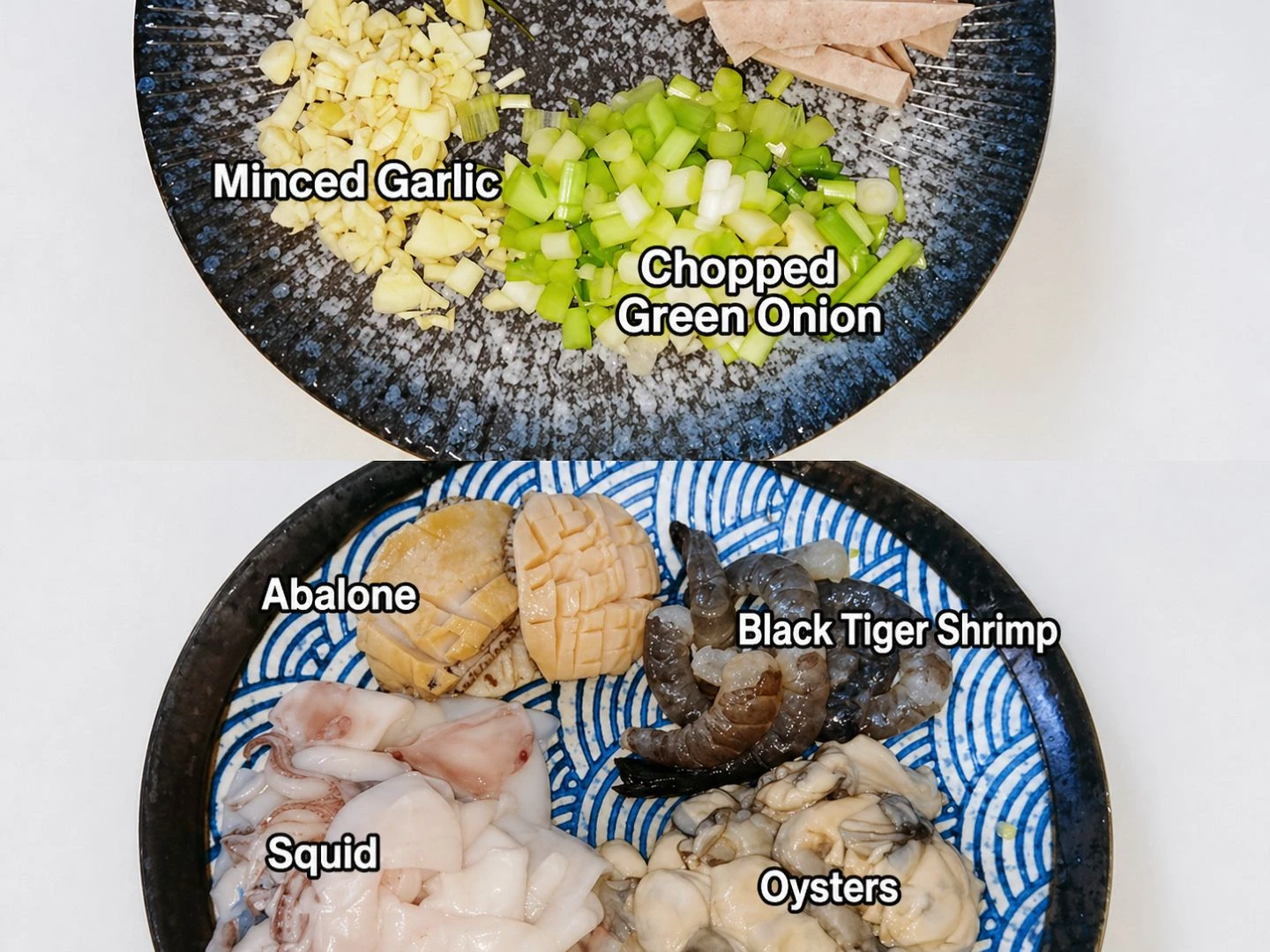
- Heat 1 tablespoon of oil in a pan over medium-low heat. Add shrimp heads and sauté for 2–3 minutes until they turn red and release their oils.
Add about 120 ml of water, bring to a boil, then simmer for 3 minutes until the broth turns slightly milky.
Strain out the shrimp heads and keep the liquid.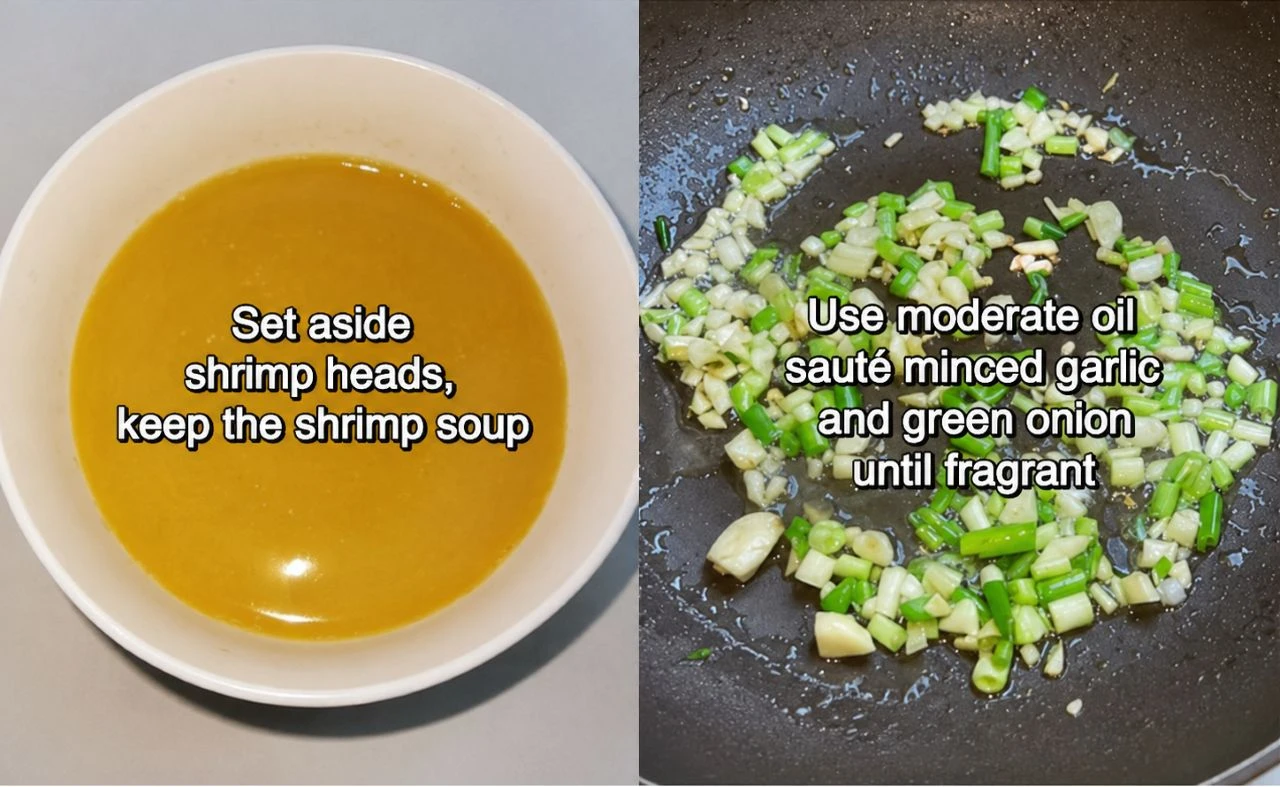
- Keep a bit of the shrimp oil in the pan. Add garlic and green onion whites, sauté until fragrant and lightly golden.
Add the meat and cook for about 1 minute until lightly browned.
Add shrimp, squid, and abalone (or substitutes), turn to high heat, and stir-fry for about 2 minutes until just cooked.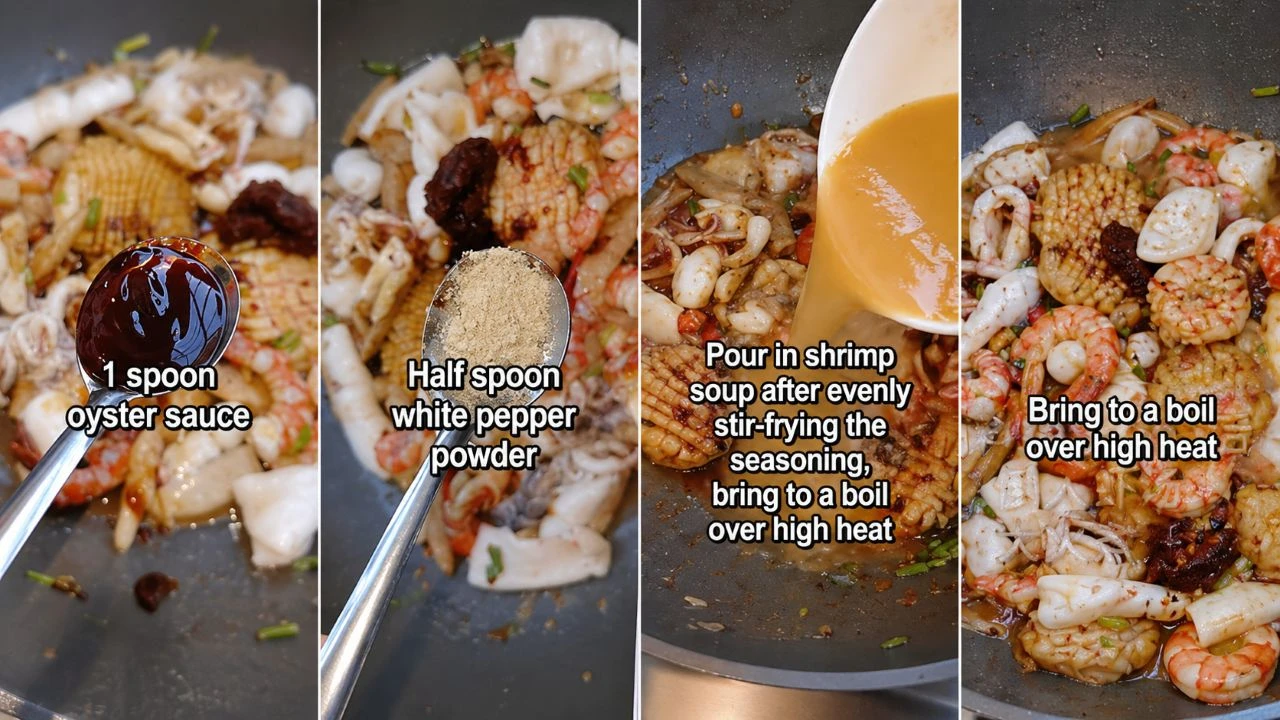
- Lower to medium heat and add satay sauce, soy sauce, oyster sauce, dark soy sauce, and white pepper. Stir for about 10 seconds to coat evenly.
Pour in the shrimp stock, bring to a boil, and cook for 1 minute.
Add oysters and green onion pieces, stir for about 30 seconds, then season with salt.
Slowly add the starch slurry while stirring until the sauce thickens and coats the seafood.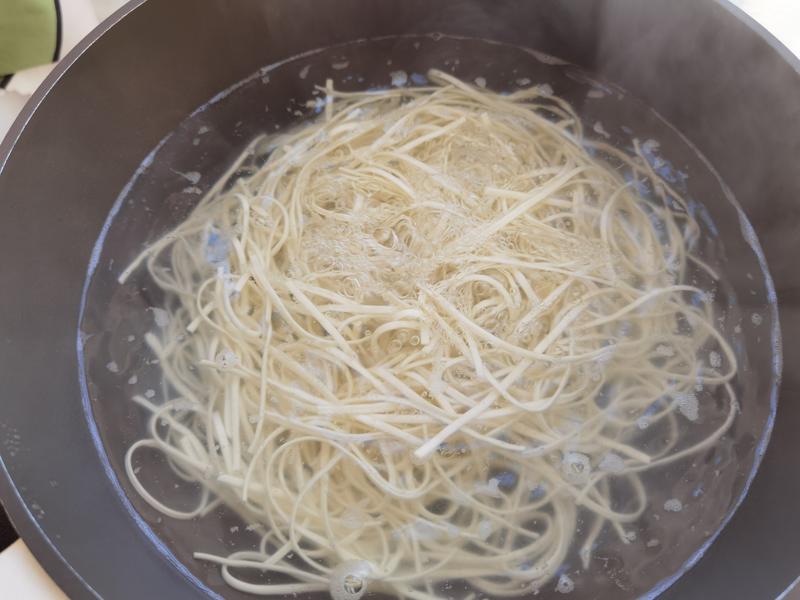
- Bring a large pot of water to a boil, add a pinch of salt and a drop of oil.
Cook noodles according to type: Dried noodles: 3–4 minutes
Spaghetti: 8–10 minutes
Linguine: 5–6 minutes
Drain and place into a bowl. Rinse briefly if you prefer a firmer texture.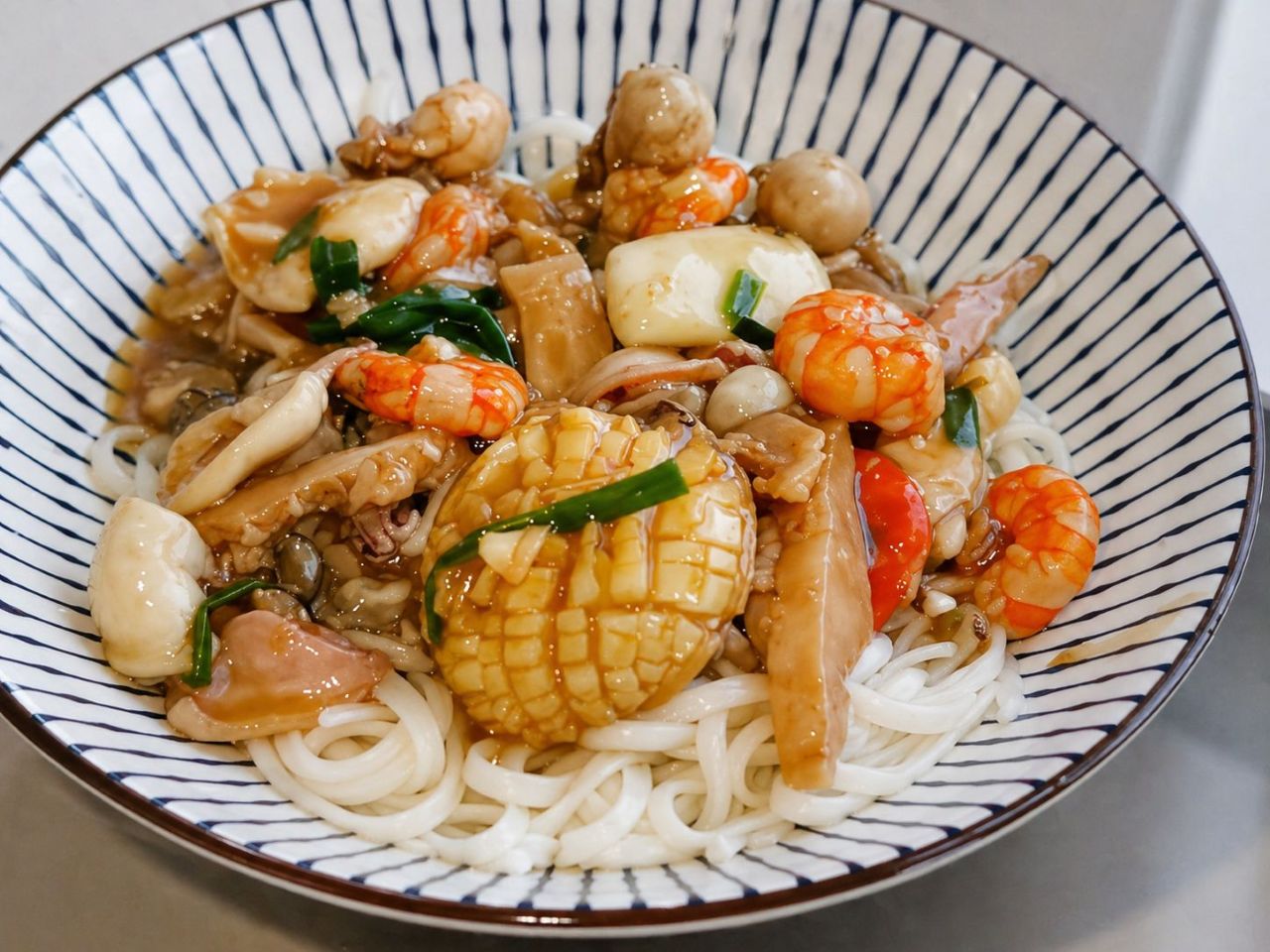
- Pour the seafood and sauce over the noodles, making sure everything is evenly coated.
Garnish with chopped green onions and serve immediately.
👉 Optional: Add a sprinkle of Parmesan cheese for a Western twist, or chili flakes for extra heat.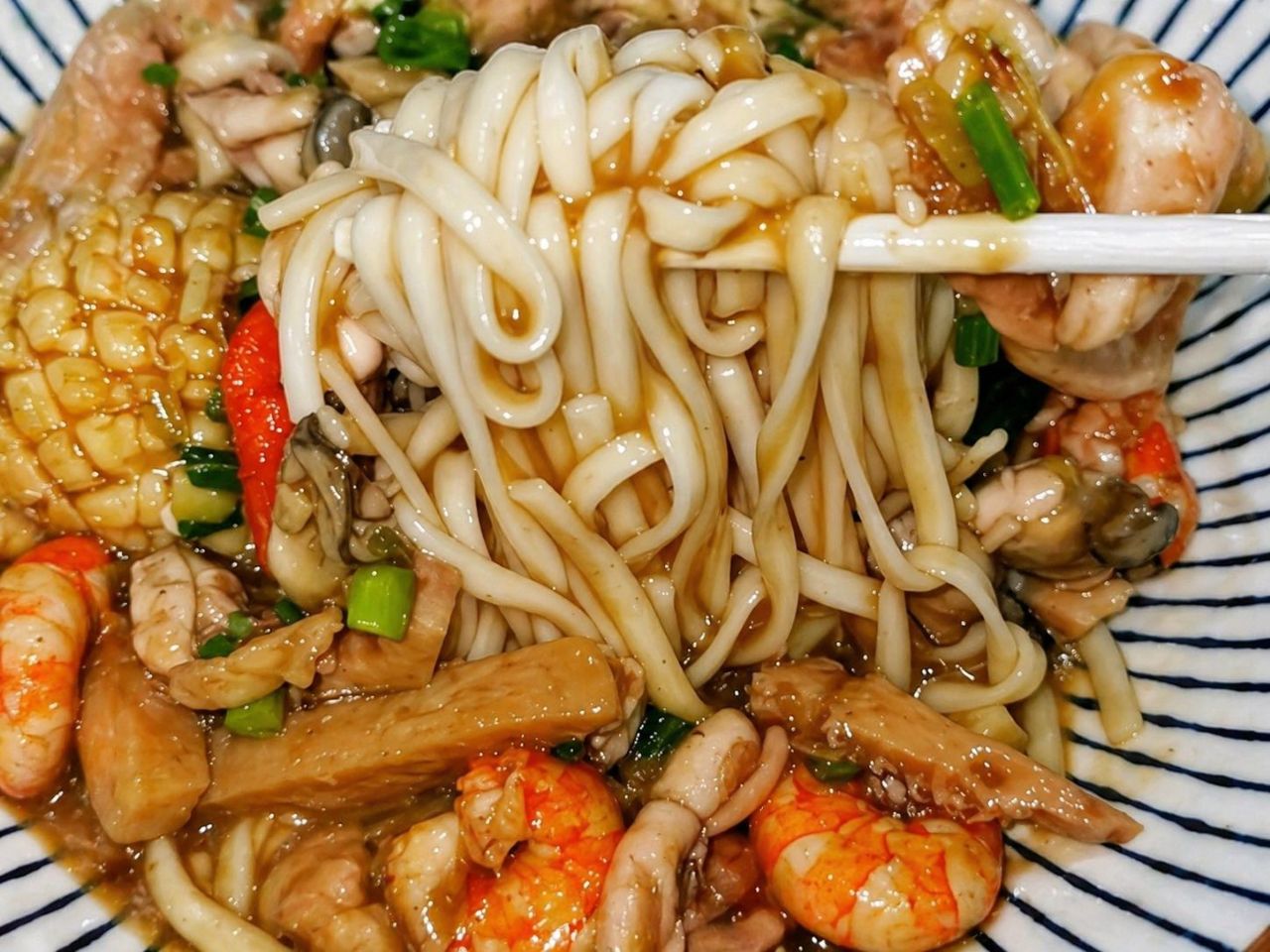
Notes
- Calories: 480 kcal Protein: 35 g (mainly from seafood and meat, rich in high-quality protein) Carbohydrates: 55 g (primarily from noodles) Fat: 12 g Fiber: 3 g Sodium: 750 mg Note: Nutrition values are estimated and may vary depending on the specific ingredients, brands, and portion sizes used.
- Calories: 480 kcal Protein: 35 g (mainly from seafood and meat, rich in high-quality protein) Carbohydrates: 55 g (primarily from noodles) Fat: 12 g Fiber: 3 g Sodium: 750 mg
Note: Nutrition values are estimated and may vary depending on the specific ingredients, brands, and portion sizes used. - 1. Don’t overcook the seafood. Cook shrimp, squid, and abalone for about 2 minutes, and oysters for around 30 seconds. Overcooking will make them tough and rubbery instead of tender and bouncy—this is the most common beginner mistake in seafood noodle recipes.
2. Don’t skip the shrimp stock. The flavor of this dish comes from the shrimp heads, so simmer them briefly to make a quick stock—it adds depth and richness to your seafood noodles.
3. Add the slurry slowly when thickening the sauce. Pour the starch slurry gradually while stirring, because adding too much at once can make the sauce overly thick and heavy.
4. Be flexible with ingredients. No abalone or oysters? No problem. You can use salmon, shrimp, clams, or other seafood, and for noodles, pasta like spaghetti or linguine works perfectly in a Western kitchen.
5. Use an easy satay sauce substitute if needed. Mix peanut butter, soy sauce, chili powder, and a little water to create a similar flavor that works well for a homemade seafood noodle sauce.
FAQs
1. What is Seafood Loein made of?
Seafood Lo Mein is typically made with noodles, mixed seafood like shrimp and squid, and a rich sauce made from soy sauce, satay sauce, and seafood broth. The combination creates a balanced flavor that is both fresh and savory.
2. How long does it take to cook Seafood Lo Mein?
A basic Seafood Lo Mein recipe takes about 30 minutes to cook, not including prep time. It’s a quick and practical meal for busy home kitchens.
3. Can I use different types of seafood in Seafood Lo Mein?
Yes, Seafood Lo Mein is very flexible. You can use shrimp, squid, scallops, clams, or even salmon depending on what’s available. The flavor will still be rich and satisfying.
4. Why is my Seafood Lo Mein not flavorful enough?
The key to a good Seafood Lo Mein is the broth. Using shrimp heads or seafood stock helps build depth. Skipping this step can make the dish taste lighter and less rich.
5. Can I store and reheat Seafood Lo Mein?
Yes, you can store the seafood sauce separately in the fridge for up to 2 days. Reheat it and pour over freshly cooked noodles to maintain the best texture and flavor.