If I had to choose one dish among the many iconic Shanghai dishes that best captures the warmth of everyday life and the feeling of home, Shanghai braised pork belly would be my first choice.
For me, it has long been more than just a dish. It’s a flavor deeply tied to my childhood, a taste passed down through three generations, carrying warmth, memory, and love.
When I was young, every family gathering or holiday meal began the same way—my grandmother and mother busy in the kitchen, and the rich aroma of braised pork belly slowly filling the house. That smell was always the true beginning of the celebration.
This recipe was first taught by my grandmother to my mother, and later, as I grew up, my mother patiently passed it on to me. Now, I find myself looking forward to the day I can teach it to my own children—so this flavor, wrapped in love and time, can continue to be shared for generations.
1. What Is Braised Pork Belly?
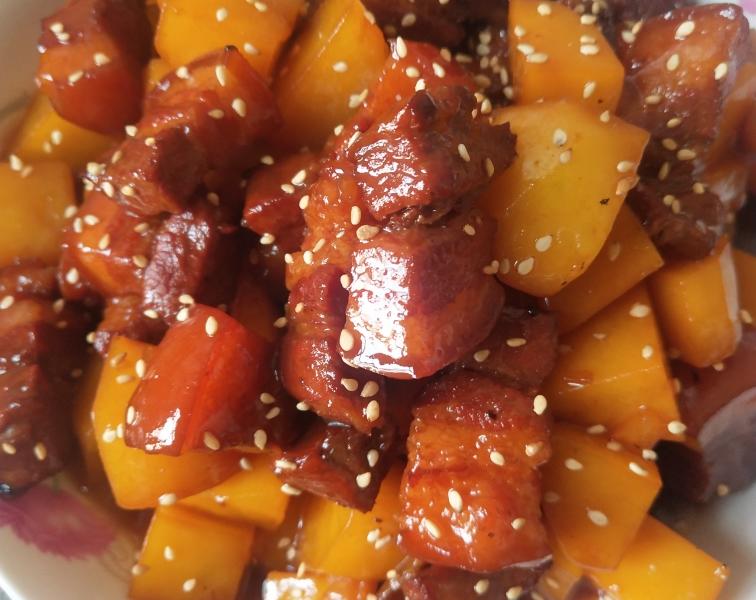
Braised pork belly is one of the most representative dishes in Shanghai cuisine and the broader Jiangnan region. It’s also a perfect example of the Chinese cooking philosophy: patience creates depth.
At its core, the dish uses skin-on pork belly, carefully balancing fat and lean layers. What makes it special is not complexity, but simplicity. With just a few essential steps—blanching, slow pan-rendering, caramelizing sugar, long braising, and natural reduction—you can create a dish with a glossy, amber-colored sauce, tender meat, and rich flavor.
The soul of the dish lies in the balance between light soy sauce and dark soy sauce.
Dark soy sauce gives it that deep, rich color, while light soy sauce brings a savory, well-rounded taste. Together, they create a naturally balanced flavor without the need for heavy seasoning.
Many people assume the thick sauce comes from added starch, but that’s not the case. The skin of the pork belly is rich in collagen, which slowly breaks down during braising. Combined with the natural stickiness of melted sugar, the sauce thickens on its own, coating each piece of meat beautifully.
This is what makes traditional Shanghai red braised pork so special—simple ingredients, natural techniques, and deeply satisfying results.
More importantly, this dish is incredibly personal. Across China, every household has its own version. While flavors may vary slightly, the essence remains the same: soft, rich, slightly sweet, and deeply comforting.
Every recipe tells a story—and every version carries a piece of home.
2. About This Braised Pork Belly with Potatoes
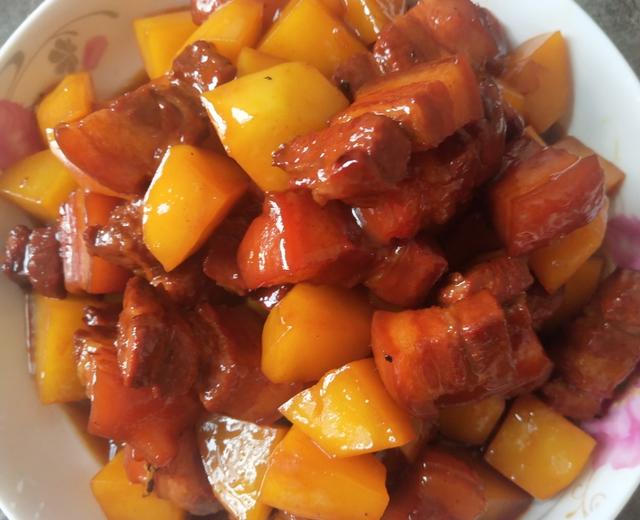
This version of braised pork belly with potatoes is a gentle adaptation of my family’s traditional recipe, designed to better fit everyday cooking and Western kitchens.
It keeps the soul of Shanghai-style braised pork while introducing potatoes, a familiar and accessible ingredient in many Western households.
Potatoes absorb the rich sauce and pork flavor, becoming soft, creamy, and deeply satisfying. At the same time, they help balance the richness of the pork, making the dish feel less heavy while adding texture and variety.
Compared to traditional Shanghai braised pork, this version uses fewer spices. Instead of strong aromatics, it relies mainly on ginger, garlic, star anise, and bay leaves to create a mild, balanced flavor that’s suitable for all ages.
It stays true to the core principles of the original recipe:
- No starch thickening
- No unnecessary additives
- Natural sauce reduction from collagen and sugar
- Slow cooking over low heat
The result is pork that becomes incredibly tender over time—soft enough to melt in your mouth—paired with a glossy, rich sauce that carries both sweetness and depth.
I usually recommend simmering for about 3 hours, but anyone familiar with this dish knows: the longer it cooks, the better it tastes.
My husband’s grandfather, for example, never timed this dish. He would simply let it simmer gently all day, allowing the flavor to slowly develop and fill the entire house with warmth.
That’s the beauty of this dish—time is its most important ingredient.
3. Regional Variations Across China
The cooking method known as “red braising” is deeply rooted in Jiangnan cuisine, but like many traditional techniques, it evolves across regions.
Each variation reflects local ingredients and tastes:
In Suzhou, the dish tends to be slightly sweeter and more delicate. It’s often cooked with boiled eggs, which absorb the rich sauce, adding another layer of flavor and nutrition.
In Shanghai, the classic pairing is with tofu knots. These absorb the sauce and pork fat, creating a chewy texture that contrasts beautifully with the soft pork.
In Ningbo, a coastal city, people often add salted fish during braising. The seafood element enhances the overall umami, giving the dish a deeper, more complex flavor.
In my home, we add potatoes—not just for taste, but to make the dish more practical and approachable for modern kitchens, especially for Western families.
It’s a small change, but it allows more people to enjoy the warmth and comfort of this traditional Chinese dish.
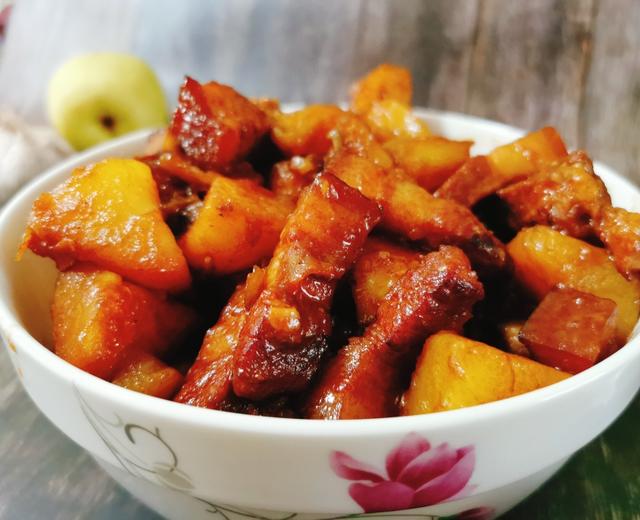
4. Why I Recommend This Recipe
I’m sharing this braised pork belly with potatoes recipe not only because it’s part of my family tradition, but also because it’s simple, practical, and easy to recreate—especially for home cooks outside of China.
First, the ingredients are easy to find.
Pork belly and potatoes are widely available in most Western supermarkets. Even the sauces and spices can be easily found online or substituted when needed.
For example, if you don’t have traditional Chinese braising soy sauce, a combination of light soy sauce and dark soy sauce works perfectly. There’s no need to search for specialty ingredients.
Personally, I recommend Lee Kum Kee soy sauce, which has been a staple in our kitchen for years and delivers a reliable, authentic flavor.
Second, the cooking process is straightforward.
There’s no need for advanced techniques like wok tossing or starch thickening. The entire dish relies on slow simmering and patience.
Even beginners can achieve great results by simply following the steps carefully.
Third, the flavor is well-balanced and adaptable.
This version is less greasy than traditional recipes and avoids overly strong spices. The result is a mild, slightly sweet, and savory dish that works well for both adults and children.
It pairs beautifully with rice, bread, or even grains, and can be served alongside vegetables like broccoli or Chinese greens for a balanced meal.
Finally, this dish carries something deeper than flavor.
It represents warmth, family, and continuity.
Just like my grandmother taught my mother, and my mother taught me, I hope this recipe can help others create their own version of this dish—and pass it on.
Because sometimes, the simplest meals are the ones that stay with us the longest.
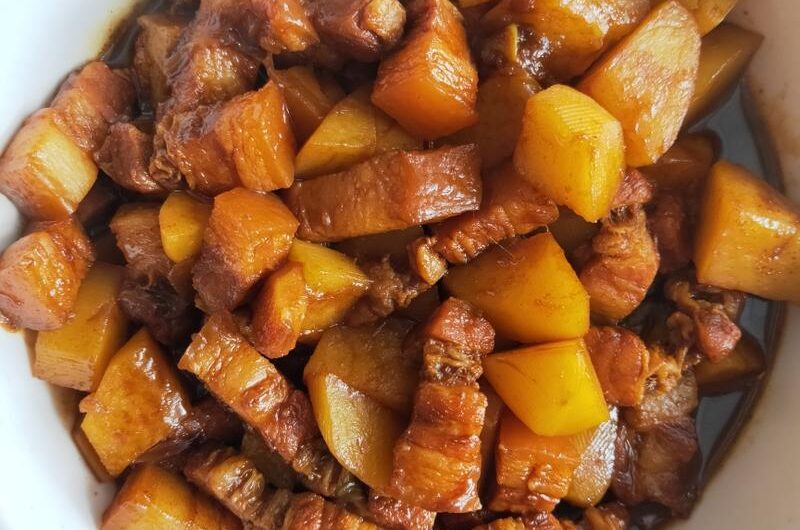
Braised Pork Belly with Potatoes(Hong Shao Rou with Potatoes/红烧肉炖土豆)
Course: EASY4
servings15
minutes55
minutes450
kcalIngredients
Pork belly (skin-on): 750g (pork belly)
Potato: 1, cut into chunks
Rock sugar: 6 pieces (or regular sugar)
Green onion, ginger, garlic: as needed
Star anise: 2
Bay leaves: 2
Cinnamon stick: small piece
Light soy sauce: 2 tsp
Dark soy sauce: 1 tsp (optional, for color)
Cooking wine: as needed (or dry white wine)
Salt: to taste
MSG (optional)
Directions
- Cut the green onions into sections, slice the ginger, and peel the garlic. Set aside the star anise, bay leaves, and cinnamon stick.
Getting everything ready before cooking helps you stay organized and ensures a smooth cooking process—especially important for slow braising dishes like braised pork belly.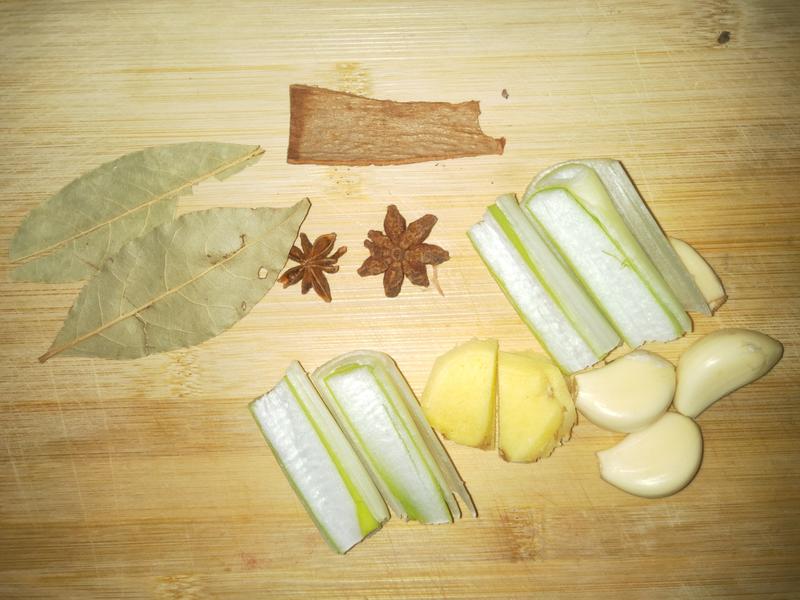
- Prepare about 6 pieces of rock sugar, which works well for around 750g of pork belly.
If you adjust the amount of meat, simply scale the sugar accordingly. This keeps the flavor balance consistent in your Chinese pork belly recipe.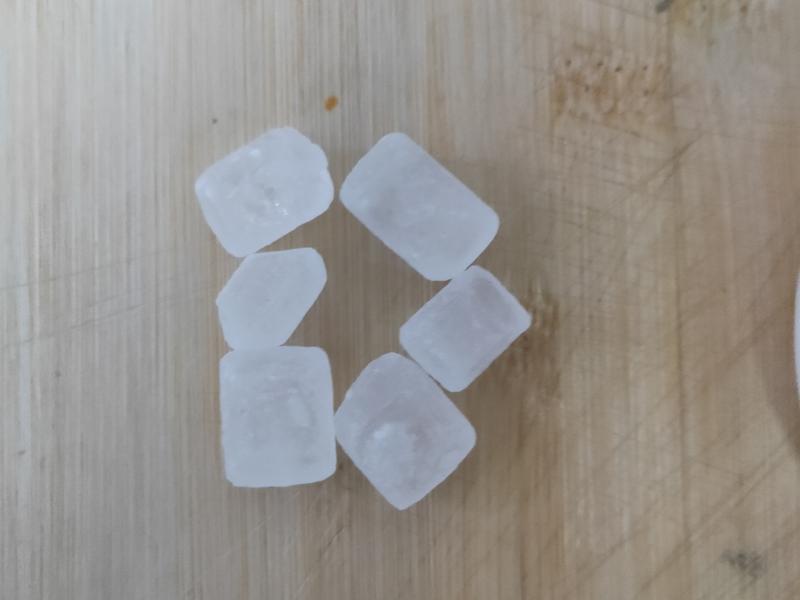
- Keep the pork belly in large chunks. Place it in a pot of cold water with ginger slices and a splash of cooking wine.
Bring to a boil over high heat and cook for about 2 minutes to remove impurities.
Remove the pork, rinse it clean, and let it drain completely.
Now, place the pork belly in a pan without adding oil. Cook over medium heat, turning occasionally.
Slowly render out excess fat until the surface becomes lightly golden.
This step is essential if you want tender but not greasy braised pork belly.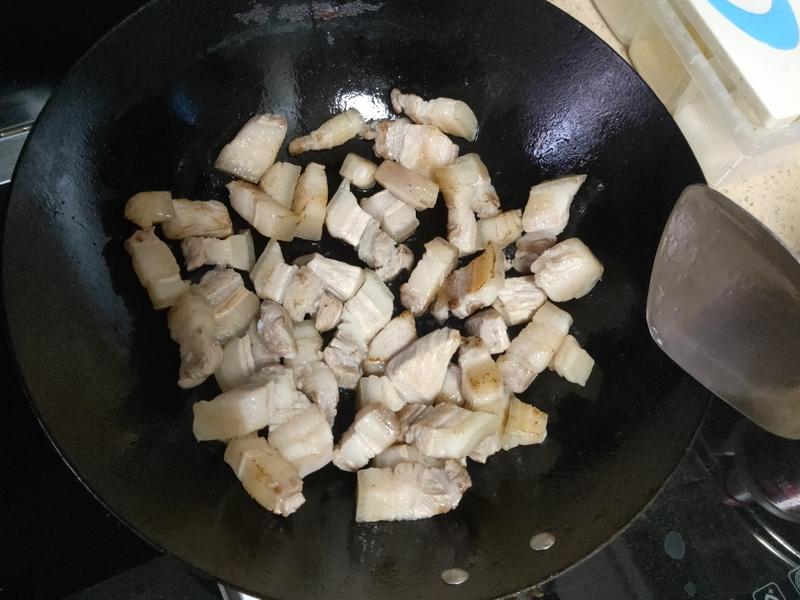
- Add a small amount of oil to the pot and turn the heat to low.
Add the rock sugar and let it melt slowly.
Stir gently until it turns into a clear reddish-brown caramel.
⚠️ Be careful not to overcook it—burnt sugar will make the dish bitter.
This caramel is what gives Chinese red braised pork its signature color and depth of flavor.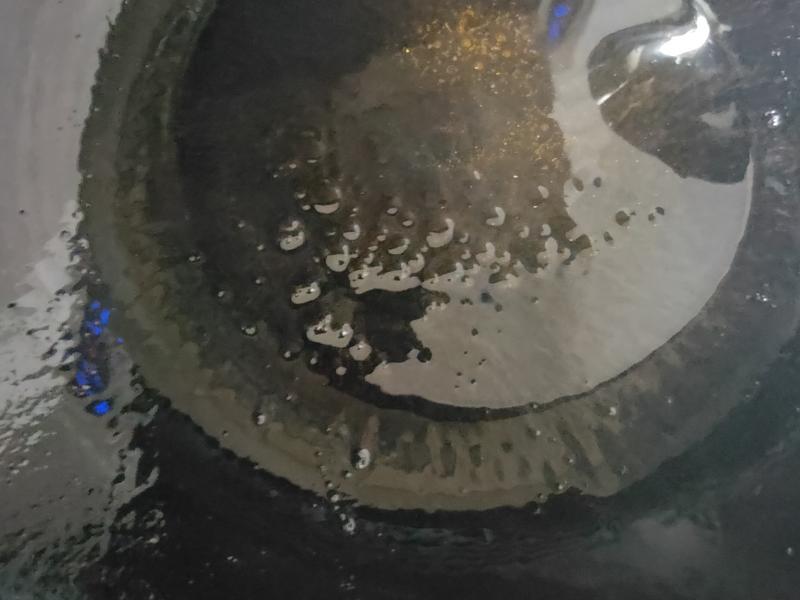
- Add the pork belly into the caramel and quickly toss to coat evenly.
Then add:
Green onions
Ginger
Garlic
Star anise, bay leaves, cinnamon
Stir for about 15–20 seconds to release the aroma.
Add:
Light soy sauce
Dark soy sauce
Continue stirring until the pork is evenly colored.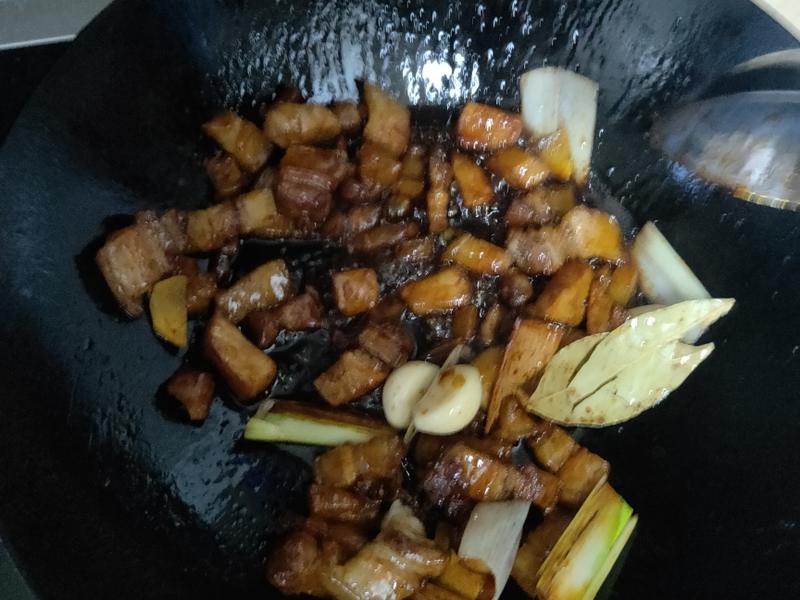
- Always use boiling hot water, never cold water.
Pour enough hot water to fully cover the pork.
Bring to a boil, then cover and reduce to medium-low heat. Let it simmer for about 40 minutes.
If you need to add more water, always use hot water.
👉 Cold water tightens the meat fibers, while hot water keeps the pork soft and tender.
This step is what creates that melt-in-your-mouth texture in a proper braised pork belly recipe.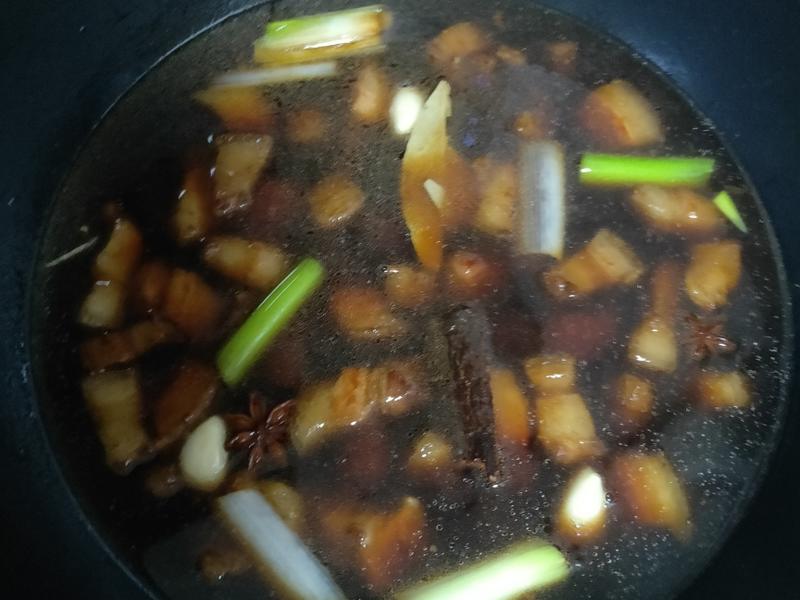
- After 40 minutes, remove the whole spices (star anise, bay leaves, cinnamon).
Add salt and optional seasoning to taste.
Add the potato chunks, then pour in a bit more hot water so the ingredients are just covered.
Cover and simmer for another 10 minutes.
The potatoes will absorb the rich sauce, making this dish even more flavorful.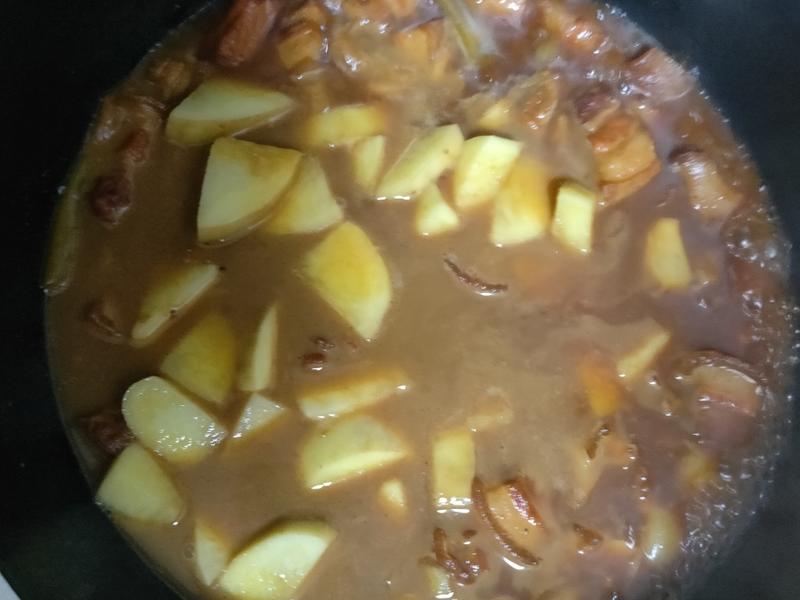
- Check that the pork is tender and the potatoes are soft.
Turn up the heat slightly to reduce the sauce until it thickens and coats the ingredients.
Once the sauce becomes glossy and rich, turn off the heat.
Let it rest briefly before serving.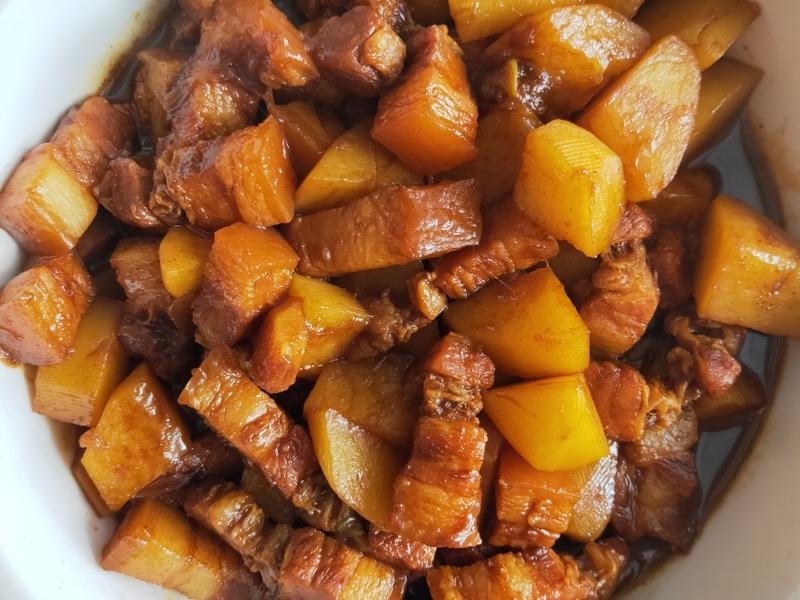
Notes
- 1.Blanching and dry-rendering the pork belly is the key to a non-greasy dish.
By removing excess fat early, you get a tender braised pork belly that feels rich but not heavy.
2.Always cook the caramel on low heat.
Once the sugar turns a deep amber (reddish-brown), immediately add the pork. Overcooking will make it bitter and ruin the flavor.
3.Use only hot water during braising.
Never add cold water at any stage. Hot water keeps the meat soft, while cold water can make the texture tough.
4.Use dark soy sauce sparingly.
It’s mainly for color. Too much will make the dish overly dark and slightly salty, affecting the balance of your Chinese pork belly recipe.
5.Add potatoes later in the cooking process.
This prevents them from breaking apart and helps maintain a soft yet structured texture. - Calories: 452 kcal. Carbohydrates: 22 g. Protein: 28 g. Fat: 29 g. Saturated Fat: 10 g. Cholesterol: 85 mg. Sodium: 610 mg. Fiber: 3 g. Sugar: 8 g
Note: These values are estimates and may vary depending on ingredient portions, cooking methods, and seasoning adjustments.
FAQs
1. How long does it take to cook braised pork belly?
A typical braised pork belly recipe takes about 1 to 1.5 hours. For the best texture, slow simmering for longer (up to 2–3 hours) will make the pork more tender and flavorful.
2. Why is my braised pork belly too greasy?
If your braised pork belly feels too oily, it’s usually because excess fat wasn’t removed. Blanching and dry-rendering the pork before braising helps reduce grease and improves texture.
3. Can I make braised pork belly without Chinese cooking wine?
Yes, you can substitute cooking wine with dry white wine. It helps remove odors and adds depth, making it a great alternative in Western kitchens.
4. Do I have to use dark soy sauce in this recipe?
No, dark soy sauce is mainly used for color. You can skip it or use a small amount. The flavor of your braised pork belly with potatoes will still be rich and balanced.
5. Can I store and reheat braised pork belly?
Yes, this dish stores very well. Keep it in the fridge for up to 3 days and reheat gently on low heat. In fact, the flavor often improves the next day.