Back in college, there was a small, unassuming noodle shop just outside the campus gate. Their soup noodles were nothing special, but their Chow Fun was unforgettable. Even now, I still think about it from time to time.
The young cook always worked over blazing high heat, tossing the wok with quick, confident movements. Sausage, eggs, and greens sizzled together, filling the air with irresistible aroma. Once the noodles hit the pan, he would loosen them, season swiftly, and stir-fry everything in seconds. When it was served, there was no excess sauce in the bowl—every bit of flavor was locked tightly into each strand of noodle. No matter how many times I ate it, it never felt like enough.
Years later, after traveling and tasting all kinds of delicacies, the dish I miss the most is still that humble, comforting plate of street-side Chow Fun
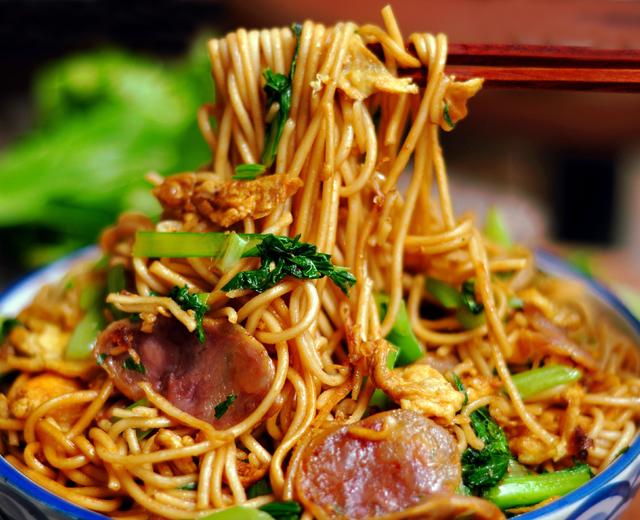
This homemade sausage and egg Chow Fun recreates the flavors I remember so vividly. It’s simple, full of wok hei, and ready in just minutes. The noodles are springy and satisfying, the toppings fresh and flavorful—every bite delivers pure comfort.
About This Dish
The term Chow Mein comes from its Cantonese pronunciation, meaning “stir-fried noodles.” It’s one of the most popular Chinese dishes worldwide, and you’ll find it on almost every Chinese takeout menu.
While there are countless variations made with different types of meat, the flavor profile is generally familiar—savory, comforting, and deeply satisfying. Soy sauce is often the key ingredient, bringing that signature umami to this classic home-style dish.
Today’s sausage and egg Chow Mein keeps things simple. There are no complicated sauces or fancy ingredients—just basic seasonings, high heat, and proper technique. What makes it special is the wok hei, that unmistakable smoky aroma created by cooking over intense heat.
If you love that street-style, no-frills kind of cooking, you’ll understand this perfectly: sometimes, the simplest combinations are the most comforting.
Ingredients
- 250g fresh wheat noodles (about 8–9 oz)
- 2 eggs
- 250g leafy greens (such as bok choy or baby greens)
- 1 Chinese sausage (lap cheong)
- 1–2 tablespoons cooking oil
- 1 tablespoon light soy sauce
- Salt, to taste
Instructions
Step 1
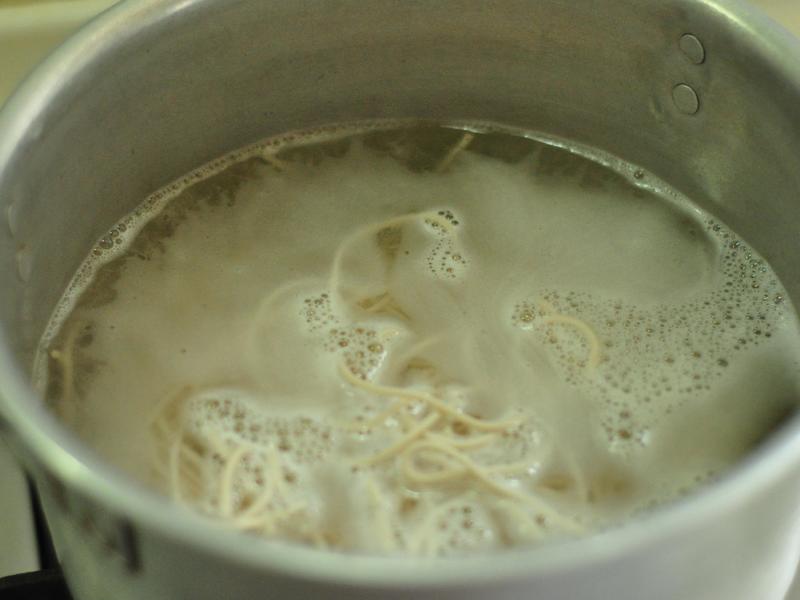
Bring a large pot of water to a rolling boil. Add a pinch of salt, then cook the fresh noodles. Boil just until the noodles loosen and begin to float, while the center still remains slightly firm. Do not overcook—slightly underdone noodles will stay springy and hold up better during stir-frying.
Step 2
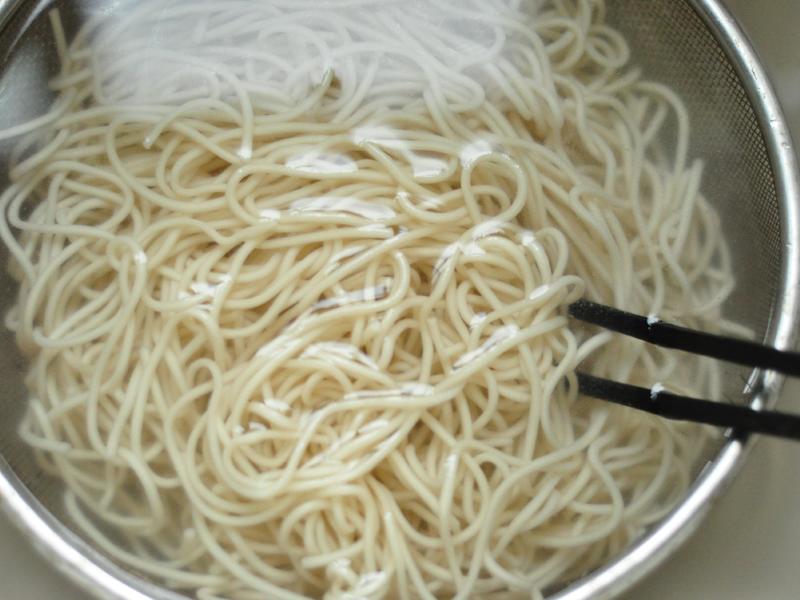
Immediately transfer the noodles to a bowl of cold water (or filtered water). Gently loosen them with chopsticks to cool them quickly and prevent sticking. This step ensures the noodles remain separated and non-clumpy.
Step 3
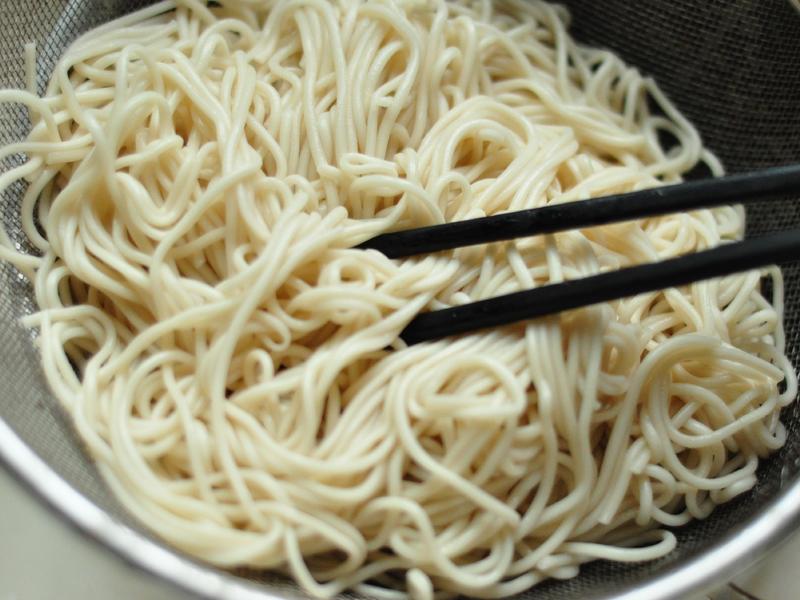
Drain the noodles thoroughly in a colander. The drier the noodles, the better the final texture—this helps achieve that signature dry, flavorful Chow Mein instead of a soggy one.
Step 4
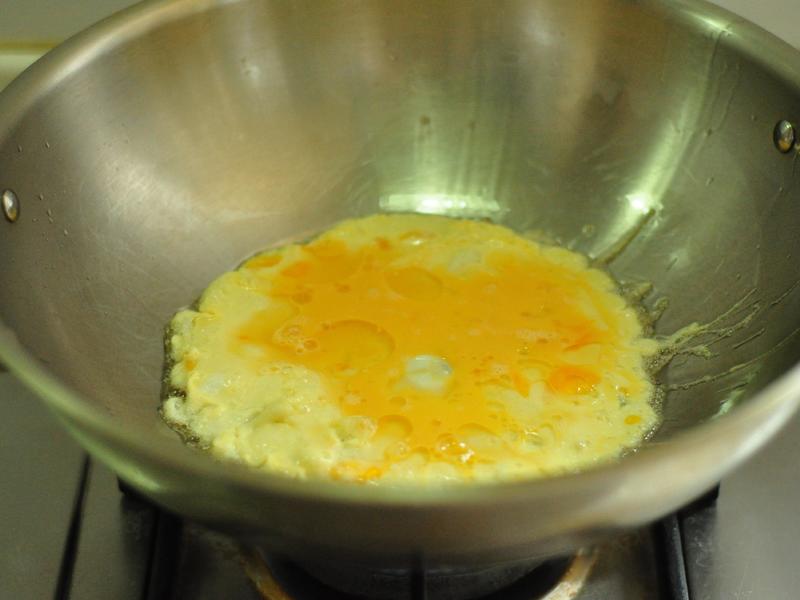
Heat a wok or large skillet over high heat. Add cooking oil and let it get very hot. Pour in the beaten eggs—the mixture should sizzle instantly upon contact.
Step 5
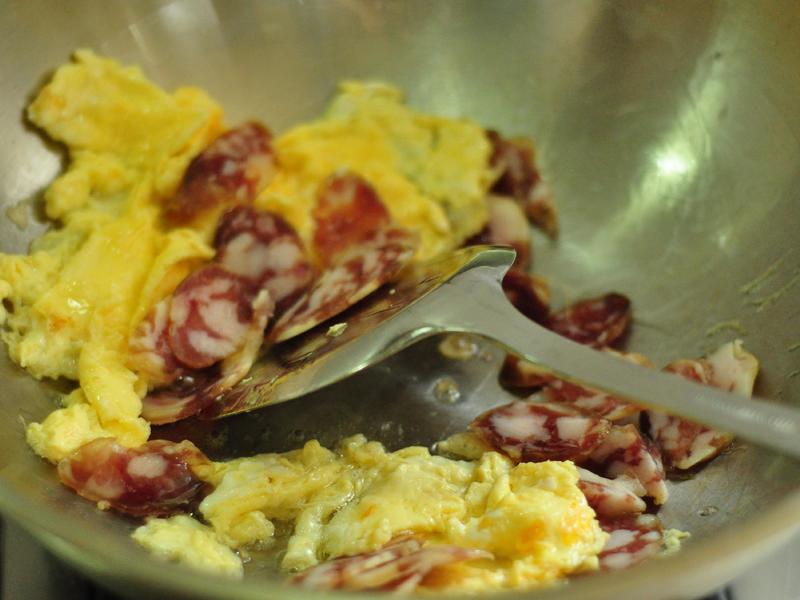
Quickly scramble the eggs into bite-sized pieces, then add sliced Chinese sausage. Stir-fry over high heat until the sausage slightly crisps at the edges and releases its rich aroma.
Step 6
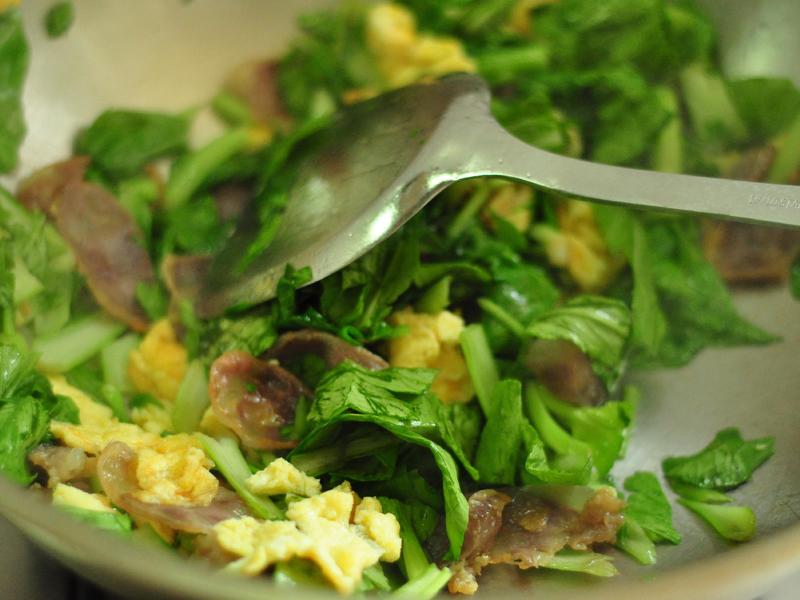
Add the washed and well-drained leafy greens. Stir-fry quickly over high heat to keep their bright color and crisp texture.
Step 7
Before the vegetables release excess moisture, add the drained noodles. Season with a pinch of salt and drizzle in the soy sauce. Continue stir-frying over high heat.
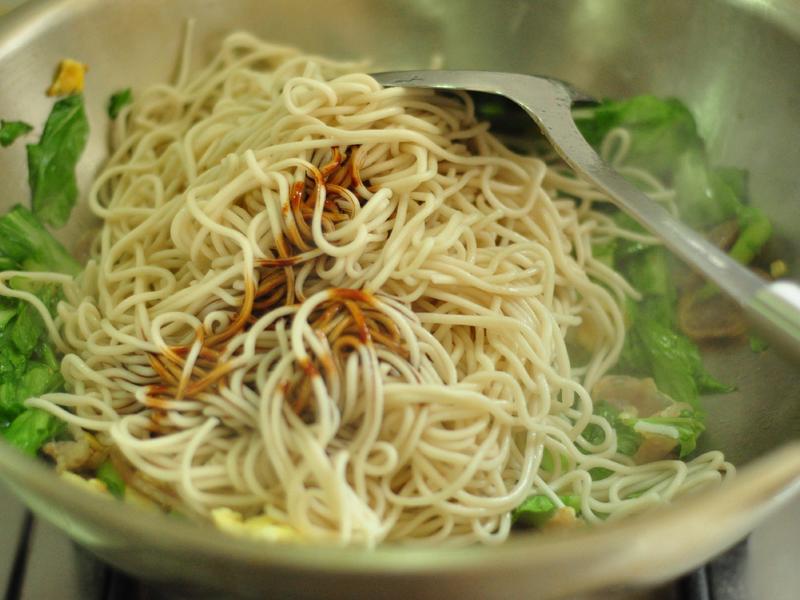
Step 8
Toss gently to avoid breaking the noodles. Keep everything moving—either by flipping or stirring—so each strand is evenly coated with seasoning and fully combined with the other ingredients.
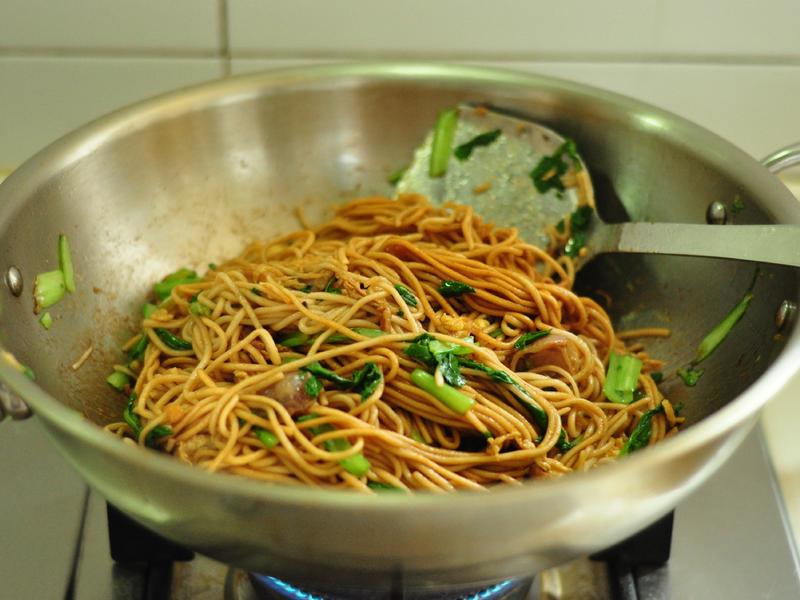
Step 9
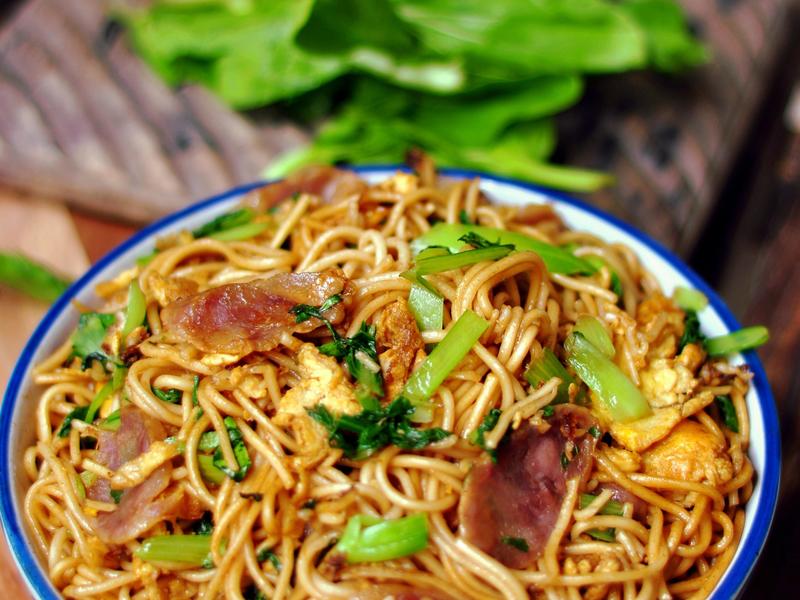
Once the noodles turn glossy and evenly flavored, and all ingredients are well combined, remove from heat and serve immediately.
Tips for the Best Chow Mein
- Slightly undercook the noodles during boiling—this is the key to achieving a chewy, springy texture after stir-frying.
- Always cook over high heat to create that signature wok hei (smoky aroma) and keep the noodles dry and flavorful.
- Make sure vegetables are well-drained before cooking to prevent excess moisture.
- Customize the flavor to your taste—add a splash of oyster sauce for extra umami, chili flakes for heat, or mix in bean sprouts, carrots, or mushrooms for more texture.
Flavor Note
The finished Chow Mein is glossy and aromatic, with every strand coated in savory flavor—from the freshness of greens to the richness of eggs and the umami of Chinese sausage. It’s simple, comforting, and deeply satisfying. One bite brings back the warmth of street-side cooking—like standing outside a college gate, holding a bowl of freshly made noodles, and savoring a moment of pure happiness.
Sausage and Egg Chow Mein (Chinese Fried Noodles)
Course: REGION4
servings10
minutes10
minutes500
kcalIngredients
250g fresh wheat noodles (about 8–9 oz)
2 eggs
250g leafy greens (such as bok choy or baby greens)
1 Chinese sausage (lap cheong)
1–2 tablespoons cooking oil
1 tablespoon light soy sauce
Salt, to taste
Directions
- Bring a large pot of water to a rolling boil. Add a pinch of salt, then cook the fresh noodles. Boil just until the noodles loosen and begin to float, while the center still remains slightly firm. Do not overcook—slightly underdone noodles will stay springy and hold up better during stir-frying.
- Immediately transfer the noodles to a bowl of cold water (or filtered water). Gently loosen them with chopsticks to cool them quickly and prevent sticking. This step ensures the noodles remain separated and non-clumpy.
- Drain the noodles thoroughly in a colander. The drier the noodles, the better the final texture—this helps achieve that signature dry, flavorful Chow Mein instead of a soggy one.
- Heat a wok or large skillet over high heat. Add cooking oil and let it get very hot. Pour in the beaten eggs—the mixture should sizzle instantly upon contact.
- Quickly scramble the eggs into bite-sized pieces, then add sliced Chinese sausage. Stir-fry over high heat until the sausage slightly crisps at the edges and releases its rich aroma.
- Add the washed and well-drained leafy greens. Stir-fry quickly over high heat to keep their bright color and crisp texture.
- Before the vegetables release excess moisture, add the drained noodles. Season with a pinch of salt and drizzle in the soy sauce. Continue stir-frying over high heat.
- Toss gently to avoid breaking the noodles. Keep everything moving—either by flipping or stirring—so each strand is evenly coated with seasoning and fully combined with the other ingredients.

- Once the noodles turn glossy and evenly flavored, and all ingredients are well combined, remove from heat and serve immediately.
Notes and Nutrition
- 1.Slightly undercook the noodles during boiling—this is the key to achieving a chewy, springy texture after stir-frying.
2.Always cook over high heat to create that signature wok hei (smoky aroma) and keep the noodles dry and flavorful.
3.Make sure vegetables are well-drained before cooking to prevent excess moisture.
4.Customize the flavor to your taste—add a splash of oyster sauce for extra umami, chili flakes for heat, or mix in bean sprouts, carrots, or mushrooms for more texture. - Calories: 466 kcal. Carbohydrates: 58 g. Protein: 20 g. Fat: 17 g. Saturated Fat: 4 g. Cholesterol: 180 mg. Sodium: 720 mg. Fiber: 4 g. Sugar: 3 g.
Note: Nutrition information is estimated and may vary depending on ingredients used.