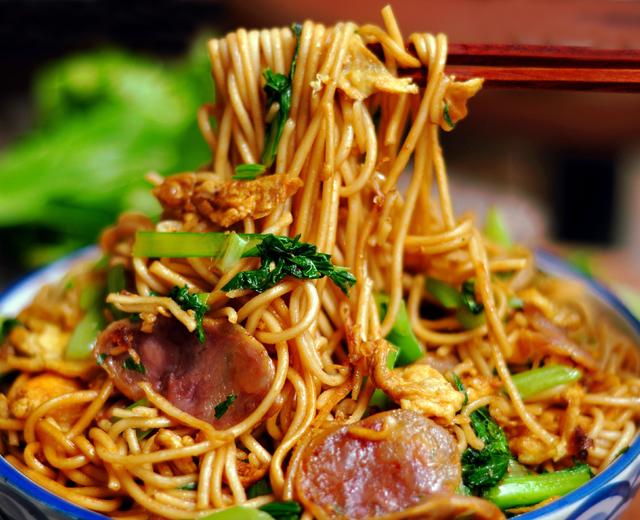
Yangzhou Fried Rice is far more than a simple bowl of stir-fried grains—it is a beloved culinary treasure with a rich history and well-deserved global fame. Originating as a court dish during China’s Sui Dynasty, it rose to prominence in Yangzhou, a city once renowned for its wealthy salt merchants and discerning food lovers, giving it a natural air of elegance that blends “high-end refinement” with the comfort of home cooking. What sets it apart even further is its status as one of the few Chinese dishes with an official government standard: this gold standard mandates at least eight ingredients, requiring the rice to be fluffy, distinct, and vibrantly colorful, ensuring it is never just a haphazard mix of rice and toppings.
As one of the first Chinese dishes to gain international popularity, it has become a global ambassador of Chinese cuisine—you can find it on the menu of nearly every Chinese restaurant around the world, and for many people overseas, Yangzhou Fried Rice is the very face of authentic Chinese fried rice. Its universal appeal lies in its savory, non-spicy flavor and perfectly chewy texture, making it a hit with diners of all ages; it pairs seamlessly with any side dish, solidifying its reputation as a “national-level” rice delicacy that transcends regional and cultural boundaries.
Common Mistakes & Solutions for Perfect Yangzhou Fried Rice
While Yangzhou Fried Rice may seem simple to make, many home cooks struggle to get it right, often ending up with mushy, clumped rice that lacks the signature fluffiness. The most common mistakes are easy to spot: using rice that is too soft or undercooked, failing to master the egg-coating technique that gives the rice its golden sheen and tender texture, cooking over insufficient heat that doesn’t allow for quick stir-frying, and using ingredients with too much moisture that make the rice soggy. Fortunately, this recipe addresses all these pain points head-on. Every step, from preparing the rice (ensuring it’s dry and separate before cooking) to the precise “egg yolk coating” method and the high-heat stir-frying technique that locks in flavor and texture, is carefully designed to achieve the iconic “grain-by-grain separation” that defines perfect Yangzhou Fried Rice. Follow these steps closely, and you’ll avoid the common pitfalls and create a restaurant-worthy dish every time.
The Ultimate Home-Style Yangzhou Fried Rice
The Secret to Perfect Yangzhou Fried Rice: No More Mushy Grains!
15
minutes30
minutes380
kcalThe secret to perfectly fluffy, non-mushy fried rice every single time.
Ingredients
2 cups Day-old cooked jasmine rice (chilled)
2 Large eggs
1/2 cup Diced ham (or leftover honey ham)
1/2 cup Frozen peas, carrots, and corn mix
1 tbsp Light soy sauce
1 tsp Shaoxing wine (or Dry Sherry for deglazing)
1/4 tsp White pepper (essential for that authentic taste)
1/2 tsp Kosher salt (to taste)
2 Scallions (thinly sliced)
1-2 tbsp Neutral oil (canola, vegetable, or grapeseed oil)
Directions
- Quick Prep (Mise en Place)
Ham: Dice into 1/4″ cubes (match the size of the peas).
Scallions: Thinly slice. Keep the whites (for frying) and greens (for garnish) separate.
Veggies: If using frozen, rinse and pat dry. Moisture is the enemy of crispy fried rice!
Eggs: Whisk with a pinch of salt and 1-2 drops of cooking wine until frothy.
Rice: Use cold, leftover rice. Break up any large clumps by hand.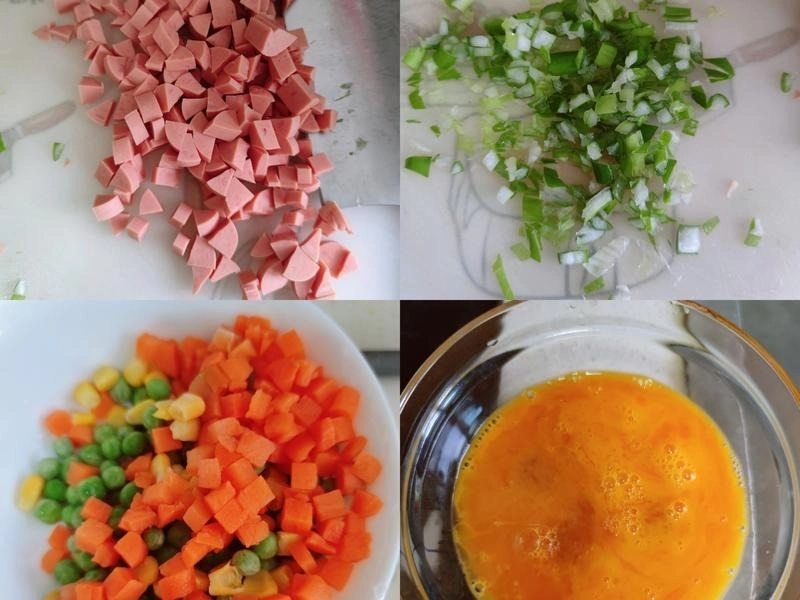
- Master the Fluffy Eggs
Whisk the eggs in a small bowl with a pinch of salt. Heat a wok or a large non-stick skillet over medium-high heat with a drizzle of oil. Pour in the eggs, scramble quickly until softly set but still slightly runny, then immediately remove them and set aside.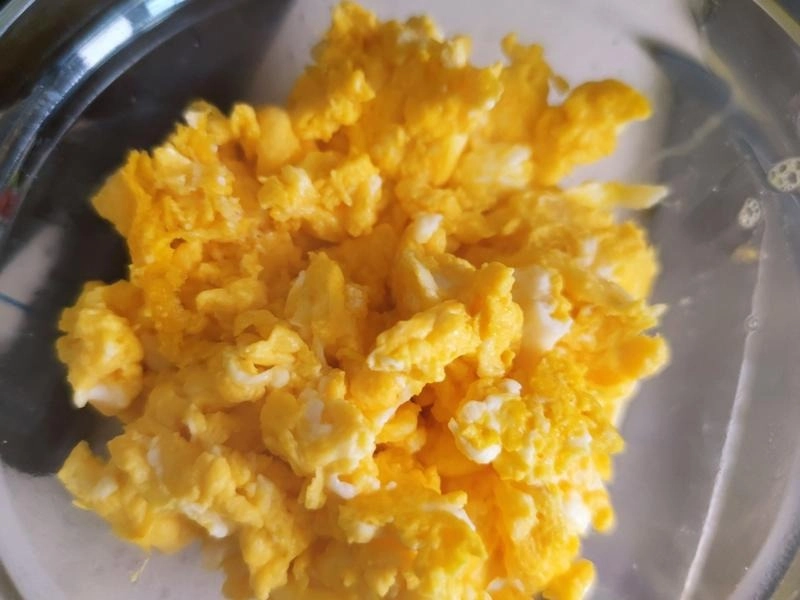
- Sauté the Aromatics & Proteins
Add another tablespoon of oil to the pan. Toss in the frozen mixed vegetables and diced ham. Sauté for 2-3 minutes until the vegetables are tender-crisp and the ham starts to get golden edges. Stir in half of the soy sauce to caramelize the ingredients slightly.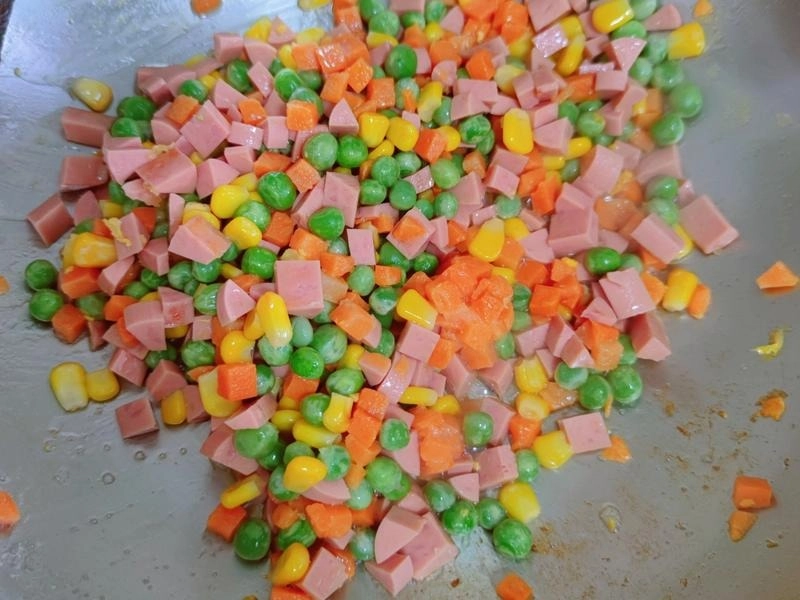
- The “Fry” in Fried Rice
Turn the heat up to high. Add the rice to the pan. Using a spatula, use a pressing and tossing motion to ensure every grain is coated in oil and heated through. Continue to fry for 3-4 minutes until the rice grains start to “pop” or jump in the pan—this means the moisture has evaporated and your rice will be perfectly chewy.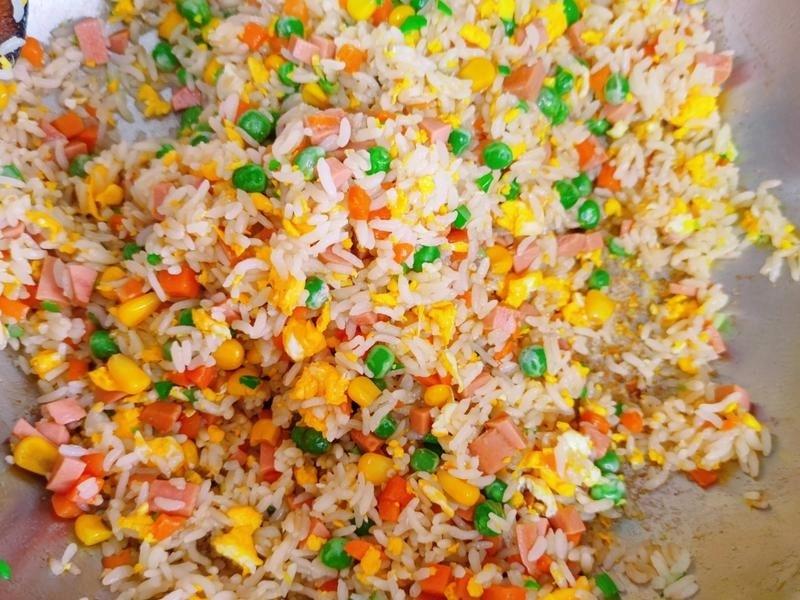
- The Final Seasoning
Return the scrambled eggs to the pan. Season with the remaining soy sauce, salt, and white pepper. Toss in the sliced scallions and give it one last vigorous stir for 30 seconds.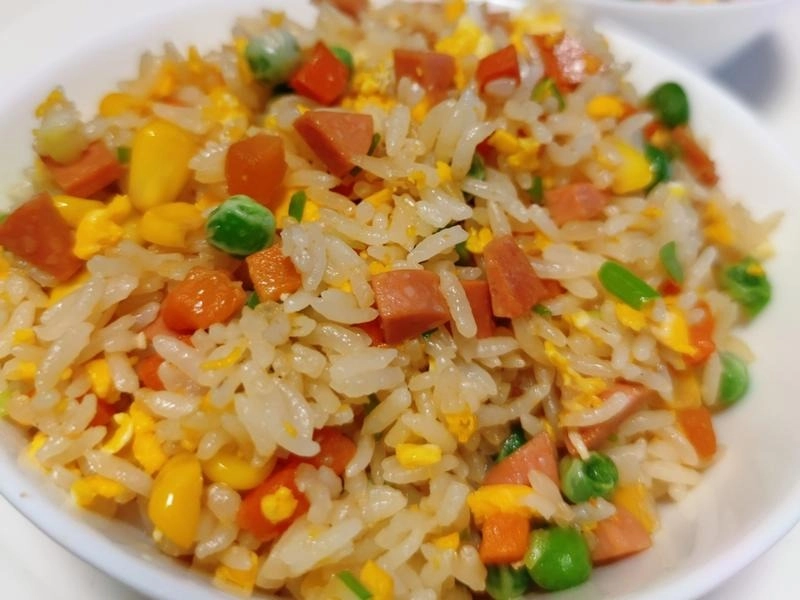
Notes
- Dryness is Key: The rice must be dry and firm. The drier the rice, the better the texture.
- High Heat: Keep the heat high enough to achieve that signature “grain-by-grain” separation.
- No Water: Never add water during the process, and don’t overcook, or the rice will lose its bite.
- Keep it Light: Go easy on the salt. The soul of Fried Rice is its delicate, clean flavor.
FAQ: Mastering Fried Rice
1. Can I use fresh rice instead of overnight rice?
It’s not recommended. Fresh rice has too much moisture, which makes the dish mushy. If you must use fresh rice, cook it with 20% less water than usual and spread it out on a tray to air-dry for at least 2 hours before frying.
2.Why do you separate the egg yolks and whites?
This is the secret to the “Gold Wrapped in Silver” look. Coating the rice in raw yolks ensures every grain is vibrant and golden. Adding the whites at the end provides a beautiful color contrast and a different texture.
3. Can I add Soy Sauce?
Authentic Yangzhou Fried Rice focuses on the natural colors of the ingredients. Soy sauce will turn the rice brown and mask the delicate flavors. Use salt or a dash of chicken bouillon for seasoning instead.
4.How to avoid the common mistakes when making Yangzhou Fried Rice?
Follow the recipe’s step-by-step guidance: prepare dry, separate rice in advance, master the “egg yolk coating” method, and use high-heat stir-frying—all designed to achieve the signature “grain-by-grain separation.”
5.What makes Yangzhou Fried Rice different from ordinary fried rice?
It has an official government standard (mandating at least 8 ingredients, fluffy/distinct/colorful rice), a rich court history from the Sui Dynasty, global popularity, and universal savory, non-spicy flavor.